5 Real-World Examples of Emergency Situations to Know
Table of Contents
- [Introduction](#introduction)
- [A Short, Real Story](#a-short-real-story)
- [What Counts as an Emergency Situation?](#what-counts-as-an-emergency-situation)
- [Keyword and Entity Overview](#keyword-and-entity-overview)
- [1) House or Building Fire](#1-house-or-building-fire)
- [2) Medical Emergency (Cardiac Arrest, Stroke, Choking)](#2-medical-emergency-cardiac-arrest-stroke-choking)
- [3) Severe Weather or Natural Disaster](#3-severe-weather-or-natural-disaster)
- [4) Road Traffic Collision](#4-road-traffic-collision)
- [5) Hazardous Material or Gas Leak](#5-hazardous-material-or-gas-leak)
- [Why Preparedness Matters](#why-preparedness-matters)
- [Common Mistakes to Avoid](#common-mistakes-to-avoid)
- [Practical Best Practices and Checklists](#practical-best-practices-and-checklists)
- [Expert Tips and a Quick Case Study](#expert-tips-and-a-quick-case-study)
- [Summary and Key Takeaways](#summary-and-key-takeaways)
- [Frequently Asked Questions About Examples of Emergency Situations](#frequently-asked-questions-about-examples-of-emergency-situations)
- [Conclusion and Next Steps](#conclusion-and-next-steps)
Introduction
Emergency situations don’t send calendar invites. They arrive fast, feel chaotic, and demand clear action. If you’ve ever wondered, “What are 5 examples of emergency situations?” you’re in the right place.
In this guide, we’ll walk through five realistic, everyday examples of emergency situations you might face at home, work, or on the road. You’ll learn what to watch for, what to do first, and what to avoid. Along the way, you’ll get simple checklists and common-sense tips to help you prepare with confidence.
The goal isn’t to scare you. It’s to give you calm, repeatable steps you can trust when seconds count.
A Short, Real Story
It was a windy autumn night when the power blinked out across the neighborhood. Emma lit a candle to finish dinner, and the kitchen felt cozy again. A few minutes later, a popping sound from the stovetop broke the quiet.
She turned and saw smoke rising—quick, thin, and then thicker. Grease had spilled and caught, licking up the pan and kissing the cabinets with heat. Her heart raced. For a split second, panic took the wheel.
Then training kicked in. She turned off the burner, slid on the lid, and smothered the fire. No water. No splashing. Just a steady hand and a covered pan. The smoke alarm screamed, but the flames died within seconds.
Afterwards, Emma stood by an open window, breathing in the cool air. The moment felt big. It wasn’t a dramatic movie scene—just a regular person remembering a few simple steps. That tiny pocket of preparation made all the difference.

What Counts as an Emergency Situation?
An emergency situation is any sudden event that threatens life, health, property, or the environment—and requires immediate action. Emergencies can be medical (like cardiac arrest), environmental (like severe storms), or human-caused (like fires or hazardous spills).
They share a few traits:
- Time critical: Waiting makes it worse.
- Clear risk: People or property are in danger.
- Need for action: You must do something now—call 911, evacuate, or administer first aid.
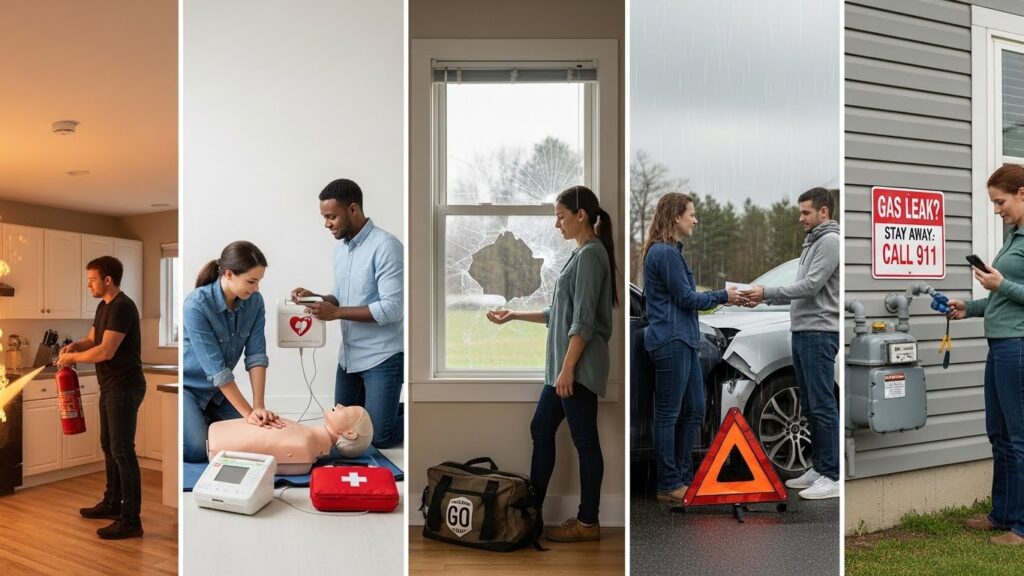
The five examples below are common, realistic, and manageable with basic preparation. You’ll see how to spot warning signs, what to do first, and how to build a quick response plan you can actually remember.
Keyword and Entity Overview
| Item | Details |
|—|—|
| Target Keyword | examples of emergency situations |
| Secondary Keywords | emergency preparedness, emergency response plan, first aid, evacuation plan, fire safety, natural disasters, 911, CPR, AED, go-bag, hazard communication, shelter-in-place |
| Relevant Entities |
[Federal Emergency Management Agency (FEMA)](https://en.wikipedia.org/wiki/Federal_Emergency_Management_Agency),
[American Red Cross](https://en.wikipedia.org/wiki/American_Red_Cross),
[Incident Command System](https://en.wikipedia.org/wiki/Incident_Command_System),
[Cardiopulmonary resuscitation (CPR)](https://en.wikipedia.org/wiki/Cardiopulmonary_resuscitation),
[Tornado](https://en.wikipedia.org/wiki/Tornado),
[Earthquake](https://en.wikipedia.org/wiki/Earthquake) |
1) House or Building Fire
A house or building fire can develop in minutes. Cooking is a leading cause, with electrical faults and heating equipment close behind. The key is early detection, quick action, and safe evacuation.
Warning signs
- Smoke, popping sounds, or the smell of burning plastic or oil
- Flickering lights or tripped breakers paired with warm outlets
- Discolored outlet covers, scorched cords, or frequent appliance sparks
Immediate actions (in order)
- If a small pan fire: turn off the burner; cover the pan with a lid to smother. Don’t use water on grease or electrical fires.
- If flames spread or smoke grows: get everyone out and close doors behind you to slow the fire.
- Pull the fire alarm if you’re in a building; use stairs, not elevators.
- Call 911 from a safe location. Share your address, floor, and any people or pets inside.
- If safe and trained, use a fire extinguisher (PASS: Pull, Aim, Squeeze, Sweep) on a small, contained fire. If unsure, evacuate.
What not to do
- Don’t reenter for belongings. Fire and smoke conditions shift quickly.
- Don’t open hot doors. Feel with the back of your hand; if hot, use another exit.
- Don’t break windows unnecessarily. It feeds the fire oxygen.
Quick home checklist
- Place smoke alarms in every bedroom, hallway, and each level. Test monthly; replace batteries twice a year.
- Keep a multi-purpose ABC extinguisher near the kitchen and garage.
- Practice two exits per room and a family meeting spot.
- Install and maintain CO detectors if you use fuel-burning appliances.
Recovery basics
After a fire, contact your insurer, document damage with photos, and avoid turning power back on until a professional clears the site. Your local fire department or the American Red Cross can connect you with housing and recovery resources.
2) Medical Emergency (Cardiac Arrest, Stroke, Choking)
Medical emergencies are among the most critical examples of emergency situations because seconds truly matter. Cardiac arrest can be fatal without immediate CPR and defibrillation. Strokes and choking also demand fast, focused responses.
Cardiac arrest
- Signs: sudden collapse, no normal breathing, no response.
- Act now: call 911, start hard, fast chest compressions at 100–120 per minute, and use an AED if available.
- Tip: Keep pushing until EMS or a trained responder takes over.
Stroke
Use the FAST check:
- Face drooping
- Arm weakness
- Speech difficulty
- Time to call 911
Don’t drive the person yourself unless 911 is unavailable. Stroke treatment is time-sensitive, and EMS can start care en route.
Choking
- For adults and children: If they can’t cough, speak, or breathe, perform abdominal thrusts (Heimlich). Call 911.
- For infants: Give five back slaps and five chest thrusts, alternating. Call 911.
- If the person becomes unresponsive: start CPR. After each set of compressions, check the mouth for an object.
First-aid essentials for your kit
- Gloves, CPR face shield, sterile gauze, adhesive bandages
- Tourniquet, trauma dressing, antiseptic wipes
- Aspirin (for suspected heart attack if advised by 911), EpiPen if prescribed
- Emergency blanket, instant cold packs
When in doubt, call 911
If a situation feels urgent or life-threatening, call. Dispatchers are trained to guide you through CPR, choking relief, or bleeding control while help is on the way.
3) Severe Weather or Natural Disaster
Storms and disasters—tornadoes, hurricanes, earthquakes, blizzards—can disrupt power, water, and roads for days. Preparedness reduces panic and speeds recovery.
Know your local risks
- Coastal areas: hurricanes, storm surge
- Plains and Midwest: tornadoes, severe thunderstorms
- West Coast: earthquakes, wildfires
- Mountain and northern regions: blizzards, ice storms
Before the event
- Build a go-bag: water (1 gallon per person per day for 3 days), nonperishable food, flashlight, batteries, first aid kit, medications, copies of IDs, cash, charger, and a battery radio.
- Keep gas tanks half full; charge devices ahead of forecasts.
- Identify shelter areas (basement, interior room away from windows) and evacuation routes.
During the event
- Tornado: shelter on the lowest level, interior room, cover your head.
- Hurricane: follow evacuation orders; if sheltering, stay indoors away from windows and watch for flooding.
- Earthquake: Drop, Cover, and Hold On. Stay put until shaking stops, then evacuate if needed.
After the event
- Avoid downed power lines and floodwaters.
- Use generators outdoors only—never in homes or garages.
- Check on neighbors, especially seniors and those with medical needs.
Document and recover
Take photos of damage, file claims early, and track all expenses. Keep receipts. Community relief centers may offer food, water, and charging stations.
4) Road Traffic Collision
A road traffic collision can change everything in a second. The scene is often loud, confusing, and hazardous. Your job is simple: protect, call, care.
Make the scene safe
- Pull over safely and turn on hazard lights.
- Place warning triangles or flares if you have them and it’s safe.
- Turn off ignitions of involved vehicles if possible.
Call for help
- Dial 911. Give your location, the number of vehicles, visible injuries, and hazards (fuel leak, smoke, trapped passengers).
Provide basic aid
- If trained, control severe bleeding with direct pressure or a tourniquet above the wound.
- Keep the injured warm and still. Don’t move them unless there’s immediate danger (fire, risk of explosion).
- Reassure the injured while waiting for EMS.
Exchange and document
- When safe, exchange licenses and insurance details. Photograph positions and damage.
- Collect witness contacts. Record weather and road conditions.
After the collision
- Seek medical evaluation even if you feel okay. Adrenaline hides injuries.
- Notify your insurance promptly.
- Consider counseling if the crash was traumatic.
5) Hazardous Material or Gas Leak
Hazardous materials show up in everyday life: cleaning products, pool chemicals, fuels, and natural gas. A leak or spill can harm lungs, skin, or the whole building.
Signs of trouble
- Rotten-egg smell (mercaptan) indicating a natural gas leak
- Hissing near gas lines or appliances
- Spilled chemicals with strong fumes, skin or eye irritation, or dizziness
Immediate actions
- If you suspect a gas leak indoors: do not switch lights on or off, don’t use phones inside. Leave immediately and call your utility or 911 from outside.
- For chemical spills: increase ventilation if safe, avoid touching, and remove people from the area. Call 911 if there’s exposure or if the spill is large.
- If someone is contaminated: avoid cross-contamination. Remove affected clothing and flush skin or eyes with water for at least 15 minutes.
Workplace considerations
- Know your Safety Data Sheets (SDS) and the location of eyewash stations.
- Follow your hazard communication plan and incident command structure during a spill.
- Report near-misses to prevent future incidents.
Home safety basics
- Store chemicals in original containers; never mix bleach and ammonia.
- Keep fuel and solvents in ventilated areas, away from heat sources.
- Install CO detectors and service gas appliances annually.
Why Preparedness Matters
Preparedness isn’t about fear; it’s about freedom. When you have a simple plan, you spend less energy panicking and more energy acting. That’s the real power behind learning these examples of emergency situations.
Three big benefits stand out:
- Faster response. You know what to do in the first 60 seconds.
- Fewer mistakes. You avoid common errors that make things worse.
- Quicker recovery. Documents, supplies, and contacts are ready.
Preparedness also builds community resilience. When families, schools, and workplaces practice, they protect one another. A single trained bystander can double or triple survival rates for cardiac arrest. That’s impact.
Common Mistakes to Avoid
Even well-meaning people slip up under stress. These are the missteps we see most:
- Delaying the call to 911 because you’re “not sure yet.” If you think it’s an emergency, call.
- Using water on grease or electrical fires. It spreads flames and can shock you.
- Moving injured crash victims unnecessarily. Stabilize and wait for EMS unless there’s immediate danger.
- Skipping smoke alarm checks. Dead batteries are a preventable tragedy.
- Running generators indoors. Carbon monoxide builds fast and can be fatal.
- Overcomplicating plans. A simple, practiced plan beats a long, unread binder.
Practical Best Practices and Checklists
There’s a lot you could do. Start with what you will do.
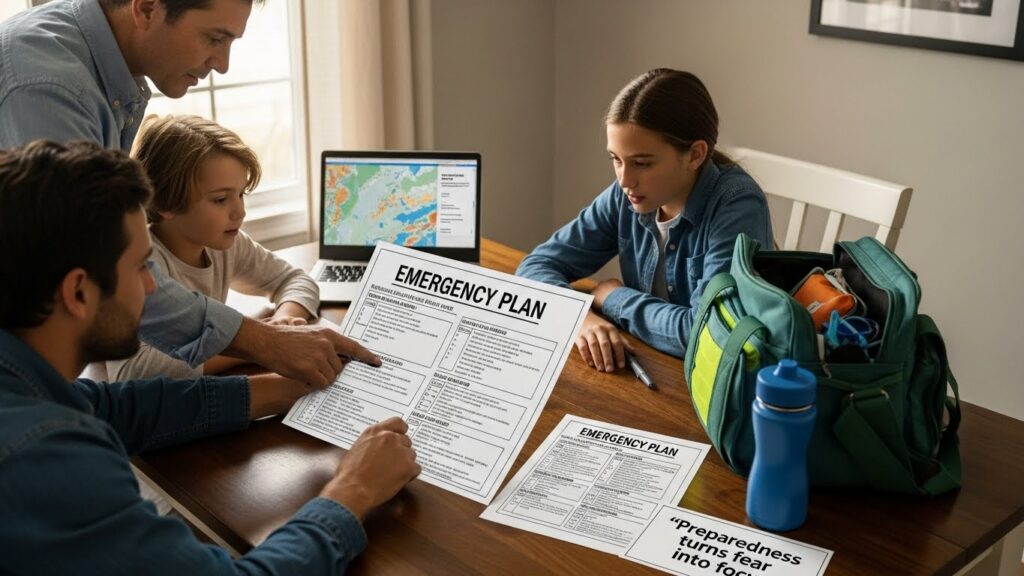
Create a one-page family emergency plan
- Contacts: list two out-of-area contacts everyone can text.
- Meeting spots: one near home, one out of the neighborhood.
- Roles: who grabs the go-bag, who shepherds pets, who shuts off utilities (if trained).
- Special needs: medications, mobility aids, baby supplies.
Build two kits: go-bag and stay-box
- Go-bag (grab-and-go): IDs, cash, meds, charger, first aid, water, snacks, flashlight, whistle, multi-tool.
- Stay-box (shelter-in-place): extra water, larger first aid supplies, batteries, radio, sanitation items, warm blankets.
Train and practice
- Take a CPR and first aid class. Practice AED use.
- Do a home fire drill twice a year. Try it at night.
- Walk your evacuation routes. Time them.
Digitize the essentials
- Scan IDs, insurance, and medical lists. Save to a secure cloud folder.
- Keep a printed copy in your go-bag.
Make safety visible
- Post emergency numbers on the fridge.
- Label breaker panels and gas shutoff valves.
- Place extinguishers where you can actually reach them.
Expert Tips and a Quick Case Study
Experts emphasize the power of the first minute. Whether it’s a fire or a medical emergency, early recognition and action drive outcomes. Two concepts help:
- The chain of survival: early recognition, early CPR, early defibrillation, advanced care.
- Layered safety: multiple protective steps—smoke alarms, drills, and clear exits—stacked together.
Case study: Apartment kitchen fire contained in under 90 seconds
A tenant in a mid-rise noticed a flare-up while frying. She covered the pan, turned off the stove, pulled the building alarm, and knocked on her neighbor’s door as she evacuated. Because the door remained closed, the fire didn’t spread smoke into the hallway. The fire department arrived to a contained incident and cleared the scene quickly.
What worked?
- Training: She’d learned not to use water on grease fires.
- Barriers: Closing the door limited smoke and oxygen.
- Communication: Pulling the alarm and calling 911 sped the response.
What could improve?
- A nearby extinguisher might have allowed a quicker knock-down if needed.
- A regular drill could reduce evacuation time even further.
These micro-moves are why learning examples of emergency situations pays off. You don’t need to be a firefighter to make smart choices in the first minute.
Summary and Key Takeaways
Let’s recap the five examples of emergency situations and the core moves for each:
1) Fire: Smother small cooking fires; evacuate and call 911 if smoke spreads. Practice two exits and a meeting spot.
2) Medical emergency: For cardiac arrest, call 911, start CPR, and use an AED. For stroke, think FAST. For choking, use thrusts or infant protocols.
3) Severe weather: Know your local risks, prepare go-bags, and follow shelter or evacuation guidance. Avoid floodwaters and downed lines.
4) Road collision: Make the scene safe, call 911, control bleeding, and document details. Don’t move the injured unless danger is immediate.
5) Hazardous leak: Evacuate for gas leaks, ventilate only if safe, avoid sparks, and follow SDS and utility guidance.
Preparation turns fear into focus. Keep it simple, write it down, practice twice a year, and refresh your kits every season.
Frequently Asked Questions About Examples of Emergency Situations
What are the most common examples of emergency situations?
The most common examples of emergency situations include house fires, medical emergencies (like cardiac arrest and choking), severe weather events, road traffic collisions, and hazardous material or gas leaks. They’re frequent enough that basic preparation makes a big difference.
When should I call 911 instead of handling it myself?
Call 911 whenever life, health, or major property is at risk, or when you’re unsure. Dispatchers can coach you through CPR, choking relief, or bleeding control while responders are on the way.
What goes in a simple emergency go-bag?
Pack water, nonperishable snacks, a flashlight, batteries, first aid kit, essential medications, copies of IDs, some cash, a charger, a battery radio, and a whistle. Add personal items like glasses, baby supplies, or pet food.
How often should I practice fire drills at home?
Twice a year is a solid baseline, and include one at night. Practice two exits from each room and agree on a family meeting spot outside. Test smoke alarms monthly.
What’s the best first step to get prepared this week?
Pick one scenario—like a kitchen fire—and write a simple, one-page plan. Place a fire extinguisher in reach, post emergency numbers, and practice. Next week, add a go-bag.
Do I really need CPR training if I’m not medical staff?
Yes. Bystander CPR can double or triple survival in cardiac arrest. A short class gives you hands-on confidence with compressions and AEDs.
Conclusion and Next Steps
Emergencies will never be convenient. But they don’t have to be paralyzing. By learning five practical examples of emergency situations and rehearsing a few simple steps, you can act faster, avoid common mistakes, and protect the people you love.
Here’s your gentle nudge: choose one scenario today and practice the first minute. Tape your plan to the fridge, place an extinguisher within reach, or sign up for a CPR class. Small steps—done now—turn into big wins when it counts.
Ready to get prepared? Start your plan, build your go-bag, and set a calendar reminder to review every six months.
External and Internal Link Suggestions
- [LINK: FEMA Ready emergency checklists -> https://www.ready.gov/kit]
- [LINK: American Red Cross first aid and CPR classes -> https://www.redcross.org/take-a-class]
- [LINK: Understanding the Incident Command System -> https://en.wikipedia.org/wiki/Incident_Command_System]
- [LINK: Home fire safety tips and escape planning -> https://www.nfpa.org/Education-and-Research/Fire-causes-and-risks/Top-fire-causes/Cooking]
Note: For a deeper dive into preparedness planning and step-by-step guides, explore authoritative resources like Ready.gov and the American Red Cross. Their checklists and plain-language advice pair well with everything in this article.