
How Much to Charge for Emergency Plumbing: A Practical Pricing Guide
Table of Contents
- [Introduction](#introduction)
- [A Quick Story to Set the Scene](#a-quick-story-to-set-the-scene)
- [What Counts as Emergency Plumbing?](#what-counts-as-emergency-plumbing)
- [The Pricing Basics: What Your Rate Must Cover](#the-pricing-basics-what-your-rate-must-cover)
- [Common Pricing Models (And When to Use Each)](#common-pricing-models-and-when-to-use-each)
- [How to Calculate Your Emergency Rate (Step by Step)](#how-to-calculate-your-emergency-rate-step-by-step)
- [Real-World Price Ranges You Can Reference](#real-world-price-ranges-you-can-reference)
- [Regional Factors: Urban vs. Suburban vs. Rural](#regional-factors-urban-vs-suburban-vs-rural)
- [Communicating Prices Without Scaring Off Customers](#communicating-prices-without-scaring-off-customers)
- [Common Mistakes to Avoid](#common-mistakes-to-avoid)
- [Best Practices and Policies That Build Trust](#best-practices-and-policies-that-build-trust)
- [Case Study: A Profitable Yet Fair Emergency Call](#case-study-a-profitable-yet-fair-emergency-call)
- [Quick Pricing Templates You Can Use Tonight](#quick-pricing-templates-you-can-use-tonight)
- [Tools, Checklists, and Scripts](#tools-checklists-and-scripts)
- [Frequently Asked Questions](#frequently-asked-questions)
- [Conclusion](#conclusion)
- [Call to Action](#call-to-action)
- [Suggested Links](#suggested-links)
Introduction
If you’re wondering how much to charge for emergency plumbing, you’re not alone. Pricing urgent, after-hours work can feel like a tightrope walk. You need to cover costs, value your time, and stay competitive—without undercutting yourself.
Here’s the thing: emergency plumbing is a premium service. The call comes in at 1:00 a.m., you grab your tools, and you make someone’s worst day better. That speed and skill deserves fair compensation. This guide breaks down real-world pricing models, multipliers, scripts, and examples so you can confidently quote, close, and deliver.
A Quick Story to Set the Scene
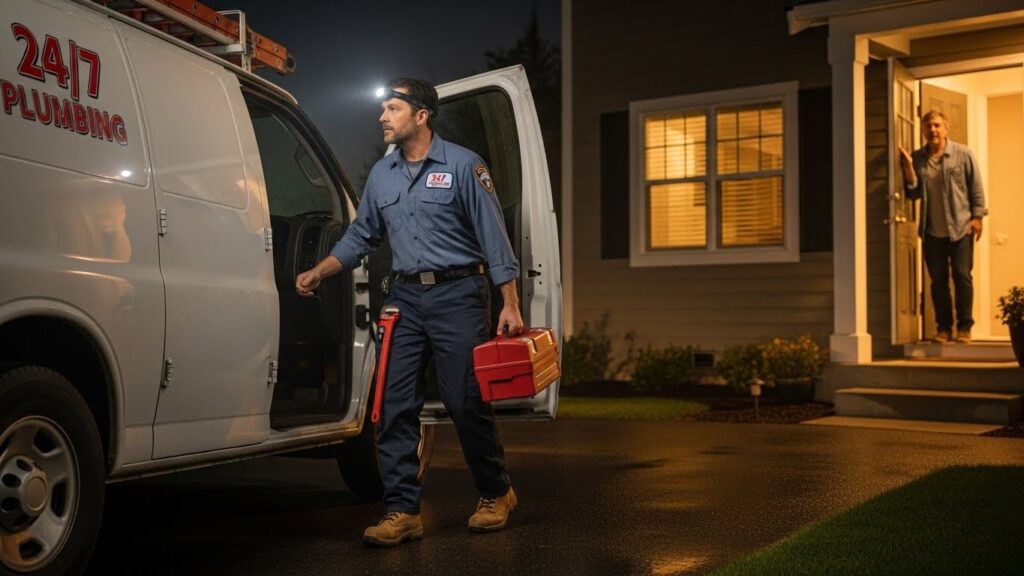
It’s 12:47 a.m. The phone buzzes. A panicked voice says, “There’s water pouring through the ceiling.” You can hear the drip in the background, fast and relentless. You ask a few questions, coach them to shut the main valve, and head out into the cold.
When you arrive, the hallway smells like wet drywall. The customer’s in slippers, eyes wide. You lay down a mat, trace the burst line, and keep your voice calm. Forty minutes later, the leak is isolated. Two hours after that, the line is patched, the area is safe, and the homeowner finally exhales.
That quiet relief? You made that happen. And your price should reflect the urgency, the disruption to your night, the extra wear on your body, and the skill you bring when it matters most.

What Counts as Emergency Plumbing?
Emergency plumbing is work that can’t wait until normal business hours without risking damage, safety, or essential service loss. It’s not just inconvenient; it’s urgent.
Common emergency scenarios include:
- Active leaks or burst pipes
- Sewage backups or main line clogs
- No water or no hot water in winter conditions
- Gas line concerns (call gas company first if suspected leak)
- Flooded basement or failed sump pump during a storm
What’s not an emergency? Slowly dripping faucets, minor drain clogs, or non-critical fixture replacements. You can still offer off-hours service for these, but price and triage them differently.
The Pricing Basics: What Your Rate Must Cover
Your emergency rate isn’t random. It should be built from your costs plus a healthy profit margin that reflects after-hours disruption and risk.
Key cost buckets:
1) Direct labor
- Your tech’s wage or your own labor time.
- Add labor burden (payroll taxes, workers’ comp, benefits). A common rule: wage × 1.3–1.5.
2) Overhead
- Vehicle payments, fuel, tools, software, insurance, rent/storage, phones, marketing, admin time.
- Many shops use $40–$70/hour in overhead per truck, sometimes more in metro areas.
3) Materials and parts
- On-hand inventory and run-outs to supply houses.
- Include markup (commonly 35%–100% depending on parts and local norms).
4) Profit margin
- Healthy net profit target: 10%–20% (some shops aim higher).
- Profit isn’t a nice-to-have; it funds growth, training, and your cushion for slow spells.
5) After-hours premium
- Multiply your standard hourly by 1.5×–2.5× depending on time, distance, weather, and demand.
- Add a call-out/dispatch fee—typically $75–$250—separate from hourly labor.
When you combine these, you get a rate that’s fair to the customer and sustainable for you.
Common Pricing Models (And When to Use Each)
There isn’t one right way to price emergency plumbing. Choose the model that fits your brand, market, and job uncertainty.
1) Hourly with minimum
- What it looks like: after-hours rate (e.g., $200/hour), 1.5–2-hour minimum.
- Good for: unknowns, troubleshooting, drain clogs where time can swing.
- Pros: protects your time for drive and setup; flexible.
- Cons: customers can get nervous if the clock runs long.
2) Flat call-out + time and materials (T&M)
- What it looks like: call-out fee (e.g., $125) + T&M at emergency rate + parts markup.
- Good for: most emergencies when you can’t predict total time.
- Pros: transparent structure; easy to explain.
- Cons: still some uncertainty for the customer.
3) Flat-rate menu (tiered)
- What it looks like: set prices for common emergencies (e.g., “after-hours main line clog: $450–$650”).
- Good for: repeatable tasks, strong process control.
- Pros: clarity breeds trust; easier to quote immediately.
- Cons: needs disciplined estimating and tight scoping.
4) Membership or priority plan pricing
- What it looks like: annual membership (e.g., $199/year) with reduced emergency fee or priority response.
- Good for: loyal customers, long-term retention, smoothing demand.
- Pros: recurring revenue, easier scheduling, happier return clients.
- Cons: must deliver on response promises consistently.
How to Calculate Your Emergency Rate (Step by Step)
Let’s build a rate you can use tonight.
Step 1: Calculate your base hourly cost
- Example: tech wage $30/hour × 1.35 labor burden = $40.50/hour true labor cost.
Step 2: Add overhead per hour
- Example: $45/hour overhead (truck, insurance, software, admin, etc.)
- Total cost per hour: $40.50 + $45 = $85.50.
Step 3: Add profit margin
- Aim for 20% net on revenue for emergency work.
- Price before margin is $85.50. To include 20% profit: $85.50 ÷ (1 − 0.20) = $106.88. Round to $110–$125 for standard hours.
Step 4: Apply after-hours multiplier
- Evenings and weekends: 1.5×–2×. Holidays or severe weather: up to 2.5×.
- If standard is $120/hour, emergency at 1.75× = $210/hour.
Step 5: Add a call-out fee
- Typical range: $75–$250. This covers dispatch, travel, and disruption.
- Example: $125 call-out.
Step 6: Materials/parts markup
- Typical: 35%–100% markup. Use a consistent policy.
Step 7: Minimum charge window
- 1.5–2.0-hour minimum is common (covers drive, diagnosis, setup, cleanup).
- Example: 2-hour minimum at $210/hour = $420 labor minimum.
Sample emergency invoice (night burst pipe)
- Call-out: $125
- Labor: 2.5 hours × $210 = $525
- Parts: $60 cost × 1.6 markup = $96
- Trip/mileage: $25 (if applicable)
- Total before tax: $771
That’s a reasonable, profitable, and defensible bill for an urgent, after-hours save.
Real-World Price Ranges You Can Reference
These are general U.S. ranges. Adjust for your region, experience, and demand.
- Call-out/dispatch fee (after-hours): $75–$250
- Emergency hourly labor rate: $175–$350+ (tech or owner-operator)
- Minimum charge window: 1.5–2 hours
- Weekend/after 8 p.m. multiplier: 1.5×–2.0×
- Holiday/severe weather multiplier: 2.0×–2.5×
- Main line clog (after-hours): $350–$700 depending on access and equipment
- Burst pipe repair (simple, accessible): $450–$900
- Water heater no-heat diagnostic (night): $200–$450, plus repair parts/labor if needed
- Sump pump failure (storm event): $400–$900 depending on pump, pit condition, and access
If you’re consistently below these ranges, you may be underpricing or missing hidden costs. If you’re above, make sure you’re offering premium response, great communication, and a strong guarantee.
Regional Factors: Urban vs. Suburban vs. Rural
- Urban/metropolitan
- Higher overhead (parking, tolls, insurance), higher wages.
- Rates commonly 20%–40% higher than national midpoints.
- Suburban
- Broad midrange rates. Travel time and traffic still matter.
- Consider zone-based trip fees to keep margins stable.
- Rural
- Longer drive times, fewer supply houses open late.
- Build more value into call-out and minimum time. Fewer competitors can support stronger pricing—if service is reliable.
Tip: review your fuel, toll, and time logs monthly. If after-hours runs average 45 minutes each way, your minimum window should reflect that.
Communicating Prices Without Scaring Off Customers
A calm, clear script wins more jobs—and reduces disputes.
Use this five-part structure on the phone:
1) Acknowledge urgency: “We’ll help you stop damage fast.”
2) Set expectations: “We can be there in about 60 minutes.”
3) Share structure (not just numbers): “There’s a $125 call-out, then emergency labor at $210/hour with a two-hour minimum. Parts are additional.”
4) Offer a ceiling or range: “Most burst-leak calls end up between $650 and $900 total.”
5) Ask permission: “Would you like us to dispatch now?”
Pro tip: Don’t itemize profit. Customers care about outcomes and fairness, not your internal math. Do itemize call-out, labor time, and parts so the bill feels transparent.
Common Mistakes to Avoid
- Undercharging the minimum
- A one-hour minimum won’t cover travel, setup, and breakdown for emergencies.
- Skipping a clear call-out fee
- You need a defined fee to cover dispatch and disruption—even if the job cancels on arrival.
- Forgetting your multiplier on holidays
- Night-of-Christmas calls are premium. Price accordingly—and explain why.
- Mixing regular and emergency rate mid-job without clarity
- If a job crosses into normal hours, clarify when the rate changes.
- Not charging for additional techs
- If the job requires two people (safety, speed, equipment), bill for both.
- Waiving fees out of fear
- Compassion is good. But make fee waivers rare and intentional, not reactive.
Best Practices and Policies That Build Trust
- Post your emergency pricing structure
- A simple page or card that explains call-out, hourly, and common ranges builds confidence.
- Offer a workmanship warranty
- Example: 12-month labor warranty on repairs (not on clogs, unless you scope the line).
- Use consent forms
- Simple digital approval before work begins saves headaches later.
- Provide prevention tips on-site
- Show how to shut off the main or test a sump pump. It builds goodwill and reviews.
- Membership plans
- Offer reduced emergency call-out and priority scheduling for members.
- Document with photos
- Before/after pictures reduce chargebacks and help with insurance claims.
Case Study: A Profitable Yet Fair Emergency Call
Scenario: 1:30 a.m., frozen copper line split in an exterior wall. Two-story home, suburban area.
- Arrival and stabilization: 20 minutes to isolate the affected line and stop the leak.
- Access and repair: 90 minutes to open a small section of drywall, cut out the split, sweat in new copper, and test.
- Cleanup and documentation: 30 minutes to dry the area, photograph, and walk the homeowner through next steps.
Pricing:
- Call-out: $145
- Emergency labor: 2.0 hours minimum at $225/hour = $450
- Additional 0.5 hour: $112.50
- Parts (cost $48) with 60% markup = $76.80
- Total before tax: $784.30
The homeowner avoids significant water damage, you’re compensated for your expertise and disruption, and both parties feel the exchange was fair.
Quick Pricing Templates You Can Use Tonight
Feel free to copy, tweak, and test these.
Emergency rate template
- Call-out/dispatch: $95–$175 (tier by distance)
- Hourly labor (after-hours): $190–$320
- Minimum: 1.5–2.0 hours
- Parts: cost × 1.5–2.0 markup
- Holiday/severe weather: add 20%–40% or raise multiplier to 2.0×–2.5×
Menu examples (adjust to your market)
- After-hours main line clog (accessible cleanout): $450–$650
- Burst pipe isolation and repair (simple access): $500–$900
- Emergency water heater relight/diagnostic: $225–$425
- Sump pump swap (standard pit, standard pump): $450–$800
Quote script (phone)
- “We can dispatch within an hour. Our emergency call-out is $135. After that, emergency labor is $210/hour with a two-hour minimum, plus parts. Most jobs like yours fall between $600 and $850. Shall I send a tech now?”
On-site approval script
- “Before we start, here’s the emergency rate and a range for tonight’s repair. If we run into hidden damage, we’ll pause and review options before any added work.”
Tools, Checklists, and Scripts
- Readiness checklist
- Stock common repair fittings and pipe types
- Spare sump pumps and check valves
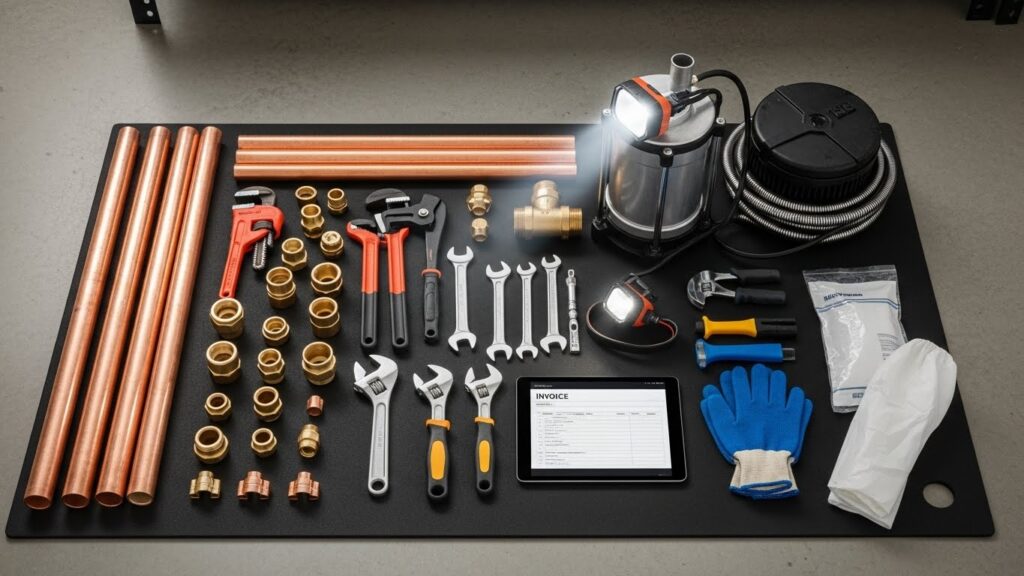
- Two clean drop cloths, plastic sheeting, and towels
- Headlamp, extra gloves, boot covers
- On-call phone fully charged, card reader ready
- Arrival routine
1) Confirm shutoff status
2) Protect floors and belongings
3) Diagnose and stabilize leak or backup
4) Give a quick range before full repair
5) Get digital consent; proceed
- After-job routine
- Test thoroughly, clean up, walk-through with photos
- Share prevention tips and warranty terms
- Send paid invoice immediately; ask for an honest review
- Mileage and travel charges
- Consider zone pricing: Zone 1 included, Zone 2 +$25, Zone 3 +$50
- Track IRS mileage rate for taxes (helps your cost modeling)
- Collection and payment
- Collect on-site. Offer cards, contactless, or ACH.
- Require deposits for parts-intensive replacements (e.g., emergency water heater swaps).
Frequently Asked Questions
How much to charge for emergency plumbing after-hours?
Most pros charge a call-out of $75–$250 plus an emergency hourly rate of $175–$350, often with a 1.5–2.0-hour minimum. Holidays or severe weather may push the multiplier to 2.0×–2.5×. Adjust for your market and experience.
What’s a fair emergency plumbing call-out fee?
A fair call-out fee typically ranges from $95 to $175 in many areas, and up to $250 in dense metros or long-distance service zones. It covers dispatch, travel, and disruption. Be transparent and state it upfront.
Should I use flat-rate or hourly pricing for emergencies?
Use flat-rate for repeatable, well-scoped tasks and hourly for uncertain diagnostics. Many contractors blend both: a clear call-out fee plus an emergency hourly rate, with menu prices for common fixes.
How do I explain higher holiday or night rates?
Be honest: after-hours work disrupts schedules, requires on-call staffing, and carries higher risk and overhead. Say, “Our emergency rate reflects 24/7 availability and fast response so we can protect your home when it matters most.”
Can I reduce my emergency rate for loyal customers?
Yes—use a membership plan or a returning-customer courtesy discount. For example, reduced call-out for members or 10% off labor. Just keep your baseline pricing profitable and consistent.
Conclusion
Pricing urgent work isn’t guesswork. It’s a system. When you calculate your true costs, set a clear emergency multiplier, and communicate a simple structure, you’ll quote confidently and get paid fairly.
If you’ve been wondering how much to charge for emergency plumbing, remember this: your speed and skill stop damage in its tracks. That’s worth a premium. Use the templates, scripts, and ranges here to fine-tune your pricing and build a reputation for fast, fair, professional service.
Call to Action
Ready to dial in your numbers? Save this guide, put your rates into a one-page emergency pricing sheet, and practice the phone script tonight. Need a push? Draft your call-out, hourly rate, and minimum now—then adjust after your next three emergency calls. Your future self will thank you.
Suggested Links
- [LINK: U.S. plumber wage data (BLS) -> https://www.bls.gov/oes/current/oes_plumbers.htm]
- [LINK: IRS standard mileage info -> https://www.irs.gov/tax-professionals/standard-mileage-rates]
- [LINK: What is price gouging? (Wikipedia) -> https://en.wikipedia.org/wiki/Price_gouging]
- [LINK: Customer service scripts for trades -> https://blog.hubspot.com/service/customer-service-scripts]