How Much Should I Pay Per Hour for a Plumber?
Table of Contents
- Introduction
- Short Story: The Leak That Changed My Budget
- Keyword & Entity Table
- How Much Should I Pay Per Hour for a Plumber?
- What Affects a Plumber’s Hourly Rate?
- Typical Hourly Rates by Region and Job Type
- Service Call Fees, Minimums, and Trip Charges Explained
- Common Mistakes People Make (and How to Avoid Them)
- How to Get a Fair Hourly Rate: A Simple Game Plan
- Real-World Scenarios and Cost Breakdowns
- DIY vs. Hiring a Pro: When Hourly Makes Sense vs. Flat-Rate
- Questions to Ask Before You Hire
- Summary and Key Takeaways
- Frequently Asked Questions About How Much Should I Pay Per Hour for a Plumber?
- Conclusion and Next Steps
- Suggested Links
- Image Prompt & Caption Table
Introduction
If you’re asking, “How much should I pay per hour for a plumber?” you’re not alone. It’s one of the most searched home repair questions, and for good reason.
Plumbing problems rarely happen at a convenient time. The right price depends on your location, the plumber’s experience, the job type, and whether it’s an emergency.
We’ll break down realistic hourly rates, the fees that catch people off guard, and how to get a fair deal without sacrificing quality. You’ll also learn how to estimate total cost—labor plus materials—so there are no surprises.
Short Story: The Leak That Changed My Budget
Two hours before a dinner party, James stepped into his kitchen and felt the cold kiss of water on his socks. A steady drip, drip, drip from under the sink. He grabbed towels, a bucket, and a YouTube tutorial. The leak only got worse.
He called the first plumber he found online. The dispatcher said, “We can be there in 45 minutes. Our hourly rate is $135, plus a $75 service call.” James hesitated—then pictured his guests and the growing puddle. “Do it,” he said.
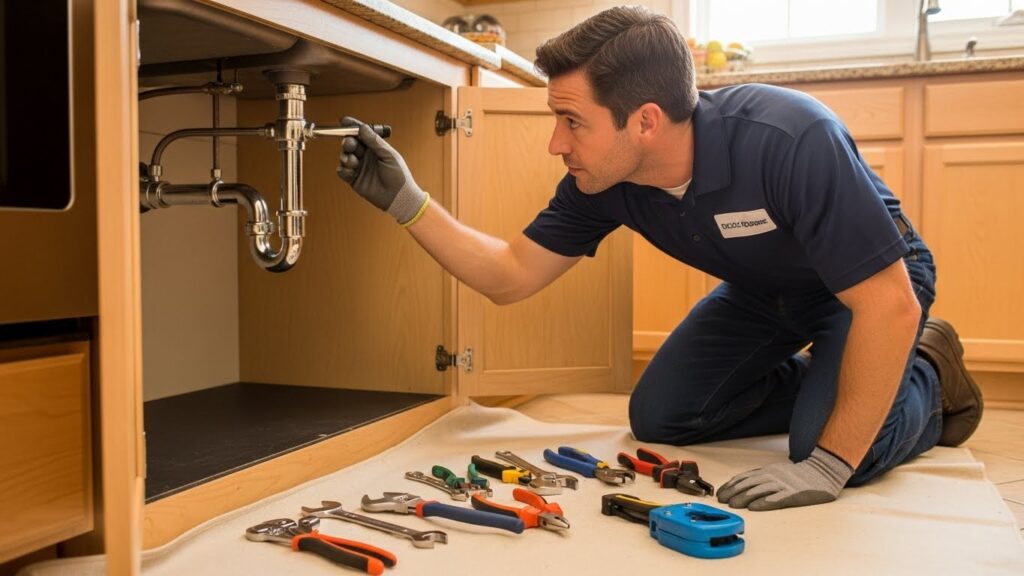
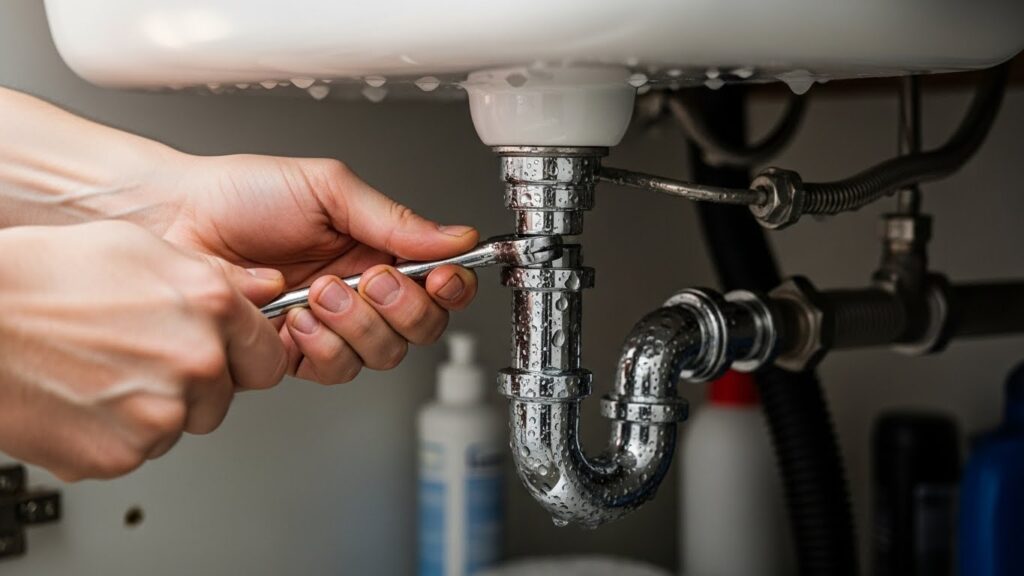
The plumber arrived, diagnosed a failed P-trap, and swapped it in under an hour. The bill? $135 labor + $75 service call + $18 in parts. James paid, relieved, but wondered: Did I overpay?
A neighbor later mentioned she paid $95 per hour for a similar fix. Another friend said $160 is normal in their city. That’s when James learned the truth: hourly plumbing rates swing widely depending on the market and the moment. The lesson? Ask the right questions, get clear estimates, and know the going rates before the water rises.
How Much Should I Pay Per Hour for a Plumber?
Here’s the short answer you came for: most homeowners pay $75–$150 per hour for a licensed plumber during standard business hours. In major metros or high-cost regions, rates often climb to $150–$200+. Emergency, weekend, or late-night calls can range from $150–$350+ per hour.
- Apprentice/handyman-level help: $50–$90 per hour (may require supervision; licensing varies).
- Journeyman plumber: $90–$150 per hour (typical for standard residential work).
- Master plumber: $120–$200+ per hour (complex jobs, code-heavy work, supervisory roles).
Remember, hourly labor is only part of the bill. You’ll likely see a service call fee, a minimum charge (often one hour), and materials. Some companies use flat-rate pricing rather than hourly; we’ll explain when that’s better for you.
To keep this simple: if you’re wondering “How much should I pay per hour for a plumber?” and it’s a weekday, non-emergency repair, expect a fair rate to land between $90 and $150 in most U.S. cities.
What Affects a Plumber’s Hourly Rate?
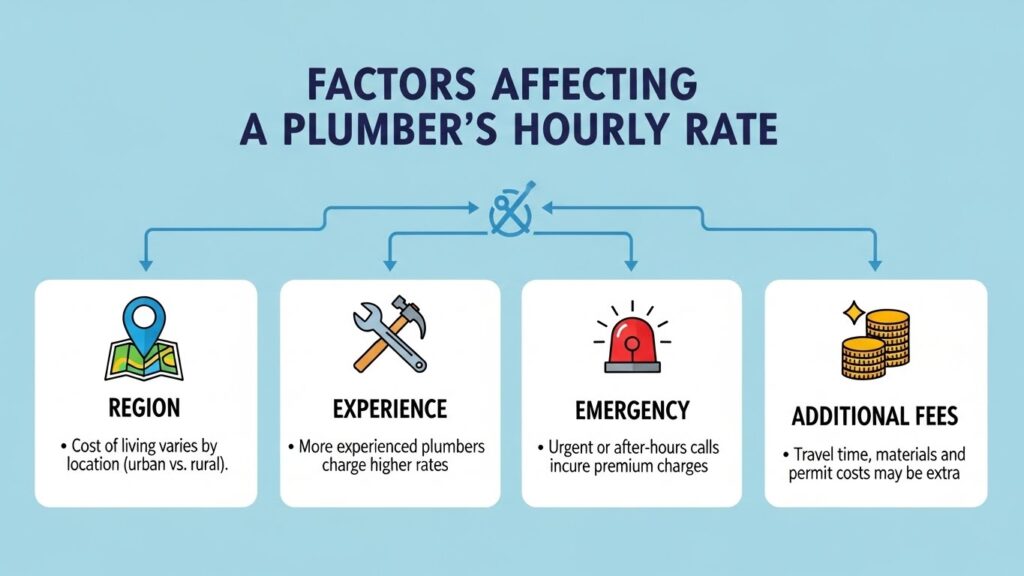
Hourly rates aren’t random. They reflect training, licensing, insurance, demand, and the cost of doing business. Here are the biggest cost drivers:
1) Experience and Credentials
- Apprentice vs. journeyman vs. master: The more advanced, the higher the rate.
- Specialized skills (tankless water heaters, hydronic systems) command premium prices.
2) Location and Market Demand
- Urban, coastal, or high-cost-of-living areas typically charge more.
- Places with labor shortages see higher rates—basic supply and demand.
3) Timing: Emergency, After-Hours, Holidays
- Nights/weekends raise rates significantly.
- Emergency response windows (under 2 hours) often add premiums or higher minimums.
4) Insurance, Licensing, and Overhead
- Reputable companies carry liability insurance, workers’ comp, trucks, tools, and training.
- These overhead costs are built into hourly rates.
5) Job Complexity and Risk
- Gas lines, sewer issues, or work that requires permits add time and expertise.
- Hidden conditions (corroded pipes, code updates) raise labor hours.
6) Access and Setup Time
- Difficult access (tight crawl spaces, slab leaks) increases time on site.
- Multi-story buildings or condo rules can slow everything down.
7) Pricing Model
- Hourly is common for troubleshooting, small repairs, and time-and-materials jobs.
- Flat-rate is common for well-defined jobs like installing a new garbage disposal or toilet.
Typical Hourly Rates by Region and Job Type
Rates vary widely, but these ranges reflect typical patterns for licensed plumbers:
By Region (Standard Hours)
- Midwest and South: $75–$130 per hour
- West Coast and Northeast: $120–$200 per hour
- Rural areas: $65–$110 per hour (fewer providers may still push rates up)
By Job Type
- Drain clearing (simple clogs): $90–$150 per hour; flat-rate often $125–$250
- Fixture replacement (faucets, toilets): $100–$160 per hour; flat-rate often $200–$450 including parts
- Water heater repair: $110–$170 per hour; flat-rate repairs vary by part
- Water heater replacement: Often flat-rate $1,000–$2,500+ (labor and materials)
- Leak detection: $120–$200 per hour; specialized equipment can add fees
- Sewer line issues: $150–$250 per hour; larger projects often bid per job
Emergency/Urgent Calls
- Expect 1.5x–2.5x the standard hourly rate, commonly $150–$350+ per hour.
- Some companies add an emergency dispatch fee instead of a higher hourly.
When you ask, “How much should I pay per hour for a plumber?” always pair the hourly rate with expected hours and any fixed fees. A lower hourly rate doesn’t help if the job takes twice as long or includes hidden charges.
Service Call Fees, Minimums, and Trip Charges Explained
One reason plumbing bills surprise people is the stack of non-labor line items. Here’s what to expect:
- Service Call (Diagnostic) Fee: $50–$100+ to cover travel, initial inspection, and dispatch. Sometimes the fee is waived if you proceed with the repair.
- Minimum Charge: Many companies bill a one-hour minimum, even for a 20-minute fix. Some set a 1.5 or 2-hour minimum for after-hours work.
- Trip/Truck Charge: $25–$75 to cover fuel, vehicle costs, and stocked parts.
- Materials and Parts: Itemized on the invoice; may include a markup (10%–30%+ is common in many trades).
- Permit Fees: If required, permits add cost and time.
- Disposal Fees: Hauling away an old water heater or debris can add $25–$75.
To keep your budget safe, ask for a “door-to-door” estimate that includes these fees. When you hear a number, repeat it back: “So including your service call and minimum, how much should I pay per hour for a plumber today, all-in?” Clarity now prevents friction later.
Common Mistakes People Make (and How to Avoid Them)
It’s easy to overpay when you’re stressed and water is going everywhere. Avoid these pitfalls:
- Not asking about minimums: A $120/hour rate with a 2-hour minimum is effectively $240 for short jobs.
- Skipping license/insurance verification: Bargain rates can cost more if something goes wrong.
- Ignoring travel fees: Trip charges matter if you’re far from the service area.
- Saying “yes” to every add-on: Request line-item pricing and justification for recommended extras.
- Failing to compare pricing models: Flat-rate may beat hourly on quick, predictable jobs.
- Not getting it in writing: Ask for a written scope, rate, estimated hours, and any guarantees.
The key is to slow down, ask clear questions, and get two or three quotes when time allows. Even in an emergency, a 3-minute set of questions can save you real money.
How to Get a Fair Hourly Rate: A Simple Game Plan
Use this quick plan when calling around:
1) Prepare Your Snapshot
- Describe the problem: When did it start? Any noises, smells, or visible leaks?
- Share photos or a 30-second video. Visuals help plumbers estimate time accurately.
2) Ask the Right Questions
- “What is your hourly rate during standard hours?”
- “Do you have a service call fee or trip charge?”
- “Is there a minimum charge? Is it different for evenings/weekends?”
- “If it’s a quick fix, can you waive the service fee?”
- “Do you offer flat-rate pricing for this type of job?”
- “Are you licensed and insured? Can you text or email your license number?”
3) Compare Apples to Apples
- Write down each company’s rate, minimums, and fees.
- Calculate the effective cost for 1 hour and for 2 hours.
4) Confirm Scope and Timeline
- “What’s your earliest arrival window?”
- “What parts might be needed and what are typical material costs?”
5) Book With Confidence
- Choose the provider that balances price, availability, and professionalism.
- Text or email confirmation so you have their rate and ETA in writing.
This is the simplest way to answer, in real time, “How much should I pay per hour for a plumber?” on your specific job.
Real-World Scenarios and Cost Breakdowns
Let’s turn ranges into real math. These examples are estimates and vary by location and provider.
Scenario 1: Leaking P-Trap Under a Sink (Standard Hours)
- Hourly rate: $120
- Time: 0.8–1.2 hours (diagnose + replace)
- Service call: $75 (waived if repair proceeds)
- Parts: $15–$35
- Estimated Total: $135–$250 depending on whether the service fee is waived
Scenario 2: Clogged Shower Drain (Standard Hours)
- Hourly rate: $110
- Time: 0.5–1.0 hours (simple snaking)
- Minimum: 1 hour
- Trip charge: $35
- Estimated Total: $145–$180
Scenario 3: Water Heater Repair (Thermocouple Replacement)
- Hourly rate: $140 (experienced tech)
- Time: 1.0–1.5 hours
- Parts: $25–$60
- Service call: $85
- Estimated Total: $250–$355
Scenario 4: After-Hours Emergency Leak
- Hourly rate: $220 (emergency rate)
- Minimum: 2 hours
- Time: 1.5 hours actual (still billed for 2)
- Parts: $20
- Estimated Total: $460–$500
Scenario 5: Toilet Installation (Flat-Rate vs. Hourly)
- Flat-rate quote: $300–$450 (labor only; you supply toilet)
- Hourly quote: $130/hour with 1-hour minimum + $50 trip
- Actual time: 1.2 hours
- Hourly Total: $206 (labor + trip), possibly cheaper than flat-rate
These snapshots show why you should always ask how long the job typically takes. The answer to “How much should I pay per hour for a plumber?” is only useful when you multiply it by time and add fees.

DIY vs. Hiring a Pro: When Hourly Makes Sense vs. Flat-Rate
DIY can save money on minor clogs, replacing aerators, or installing a new showerhead. But plumbing can escalate quickly. A small mistake can lead to water damage, mold, or code issues.
When Hourly Makes Sense
- Troubleshooting unknown problems (leaks, odd noises, intermittent issues)
- Smaller, quick repairs (P-traps, supply lines, simple shutoff valves)
- When you trust the plumber’s efficiency and want to pay only for time spent
When Flat-Rate Makes Sense
- Predictable installs (toilets, disposals, faucets)
- Jobs with clear scope and known parts
- When you value a guaranteed, not-to-exceed number
Either way, the main question—“How much should I pay per hour for a plumber?”—remains crucial to compare offers and avoid sticker shock.
Questions to Ask Before You Hire
Use this checklist on your next call or text with a plumber:
- What’s your standard hourly rate? What does it include?
- Do you charge a service call or trip fee? How much?
- Is there a minimum number of hours for this visit?
- What would a typical total look like for this job (labor + parts)?
- Do you offer flat-rate pricing for this specific task?
- Are you licensed and insured? Can you share your license number?
- What’s your warranty on labor and parts?
- Can I approve additional work before you proceed?
- What’s your earliest availability, and how long will the job take?
Ask these, and you’ll build confidence faster than the drip can fill a bucket.
Summary and Key Takeaways
- For most homeowners, a fair hourly rate is $75–$150 during standard hours; $150–$350+ for emergencies.
- Factor in service call fees, trip charges, minimums, and materials.
- Rates vary by region, experience level, and job complexity.
- Compare hourly versus flat-rate for your specific task.
- Get details in writing before work starts.
So, how much should I pay per hour for a plumber? Use the ranges and scripts here, then confirm specifics with two or three local providers. A few questions now can save you hundreds later.
Frequently Asked Questions About How Much Should I Pay Per Hour for a Plumber?
1) What’s a reasonable hourly rate for a plumber near me?
A reasonable rate is typically $75–$150 per hour during business hours. In major metros, it can reach $150–$200. Always ask about minimums and service call fees, not just the hourly number.
2) Why is an emergency plumber so expensive?
Emergency calls require rapid response and after-hours labor, so rates increase to $150–$350+ per hour. You may also see a higher minimum or an emergency dispatch fee on top of the hourly rate.
3) Is it cheaper to hire a handyman instead of a licensed plumber?
For very simple tasks, a handyman can be cheaper per hour. But for anything involving drain lines, gas, permits, or code compliance, a licensed plumber is safer and often cheaper long-term.
4) How do I avoid surprise fees on my plumbing bill?
Ask for an all-in estimate including service call, trip charge, minimum hours, and materials. Confirm whether the fee is waived if you proceed with repairs and whether any work is flat-rate.
5) Should I choose hourly or flat-rate pricing?
Hourly can be fair for troubleshooting or quick repairs. Flat-rate is better for predictable installs. Ask the company which option applies to your job and compare totals before approving work.
6) Do plumbers mark up materials?
Many do, typically 10%–30%+, which covers sourcing, stocking, and warranty handling. If you want to supply parts, ask first—some plumbers won’t warranty homeowner-supplied materials.
7) Can I negotiate a plumber’s hourly rate?
You may have more success negotiating fees (like service calls) than the core hourly rate. Bundling multiple tasks in one visit or scheduling during non-peak times can also help.
8) How many quotes should I get?
When time allows, get at least two. Three is better for larger jobs. Quotes make it easier to answer, based on facts, “How much should I pay per hour for a plumber?”
Conclusion and Next Steps
If you’ve read this far, you’re ready to make a clear, confident choice. For standard jobs, expect $75–$150 per hour. For urgent, off-hours work, budget $150–$350+ per hour. Ask about service call fees, minimums, and whether a flat-rate applies.
Next steps:
- Snap a photo or video of the issue.
- Call two providers and ask the questions in this guide.
- Choose the best balance of price, availability, and professionalism.
Remember, the question “How much should I pay per hour for a plumber?” is the starting point—not the whole picture. Get the details, then give the green light.
Call-to-Action: Ready to compare local rates? Reach out to two or three licensed plumbers today and use this checklist to lock in a fair price.
Suggested Links
- [LINK: Bureau of Labor Statistics – Plumbers, Pipefitters, and Steamfitters -> https://www.bls.gov/ooh/construction-and-extraction/plumbers-pipefitters-and-steamfitters.htm]
- [LINK: Plumbing (Wikipedia) -> https://en.wikipedia.org/wiki/Plumbing]
- [LINK: How to Hire a Contractor (Internal) -> https://primeemergencyplumbing.com/emergency-plumbing-services-in-portland/]
- [LINK: Emergency Plumber Costs Explained (Internal) -> https://primeemergencyplumbing.com/emergency-plumbing-services-in-portland/]