
How Much Do Emergency Plumbers Make
Table of Contents
- Quick Answer: How Much Do Emergency Plumbers Make?
- A Short Story From the Field
- What Is an Emergency Plumber?
- Salary Overview and Pay Structures
- Factors That Influence Emergency Plumber Pay
- Typical Rates, Fees, and After-Hours Premiums
- Employee vs. Self-Employed: Who Earns More?
- Licenses, Certifications, and Union Membership
- Regional Pay Differences and Best-Paying Markets
- Costs and Profit Margins (For Business Owners)
- How to Increase Your Earnings (Step-by-Step)
- Case Study: A Year in the Life (Numbers Inside)
- Common Mistakes That Cap Your Income
- Key Takeaways
- Frequently Asked Questions About How much do emergency plumbers make?
- Conclusion and Next Steps
—
Quick Answer: How Much Do Emergency Plumbers Make?
If you’re wondering “how much do emergency plumbers make?” here’s the short version. In the U.S., emergency plumbers typically earn more than standard service plumbers because they handle after-hours calls, weekends, and holidays.
- Employed emergency plumbers commonly earn $70,000–$95,000 per year, with overtime and on-call differentials.
- In high-demand regions or with strong experience, total compensation can exceed $100,000.
- Self-employed emergency plumbers can generate $150,000–$350,000+ in annual revenue. After overhead, take-home profit often lands around 10%–25%, depending on efficiency.
- Typical after-hours rates billed to customers range from $150–$350 per hour, plus call-out fees ($75–$250) and premiums for nights/holidays.
That’s the snapshot. Now, let’s bring it to life.
—
A Short Story From the Field
You know that moment when your phone buzzes at 1:12 a.m., and your stomach drops? That was Rafael’s life, at least on weekends. He’d been a journeyman plumber for six years and recently switched to emergency work to boost his income and build a nest egg for a small business.
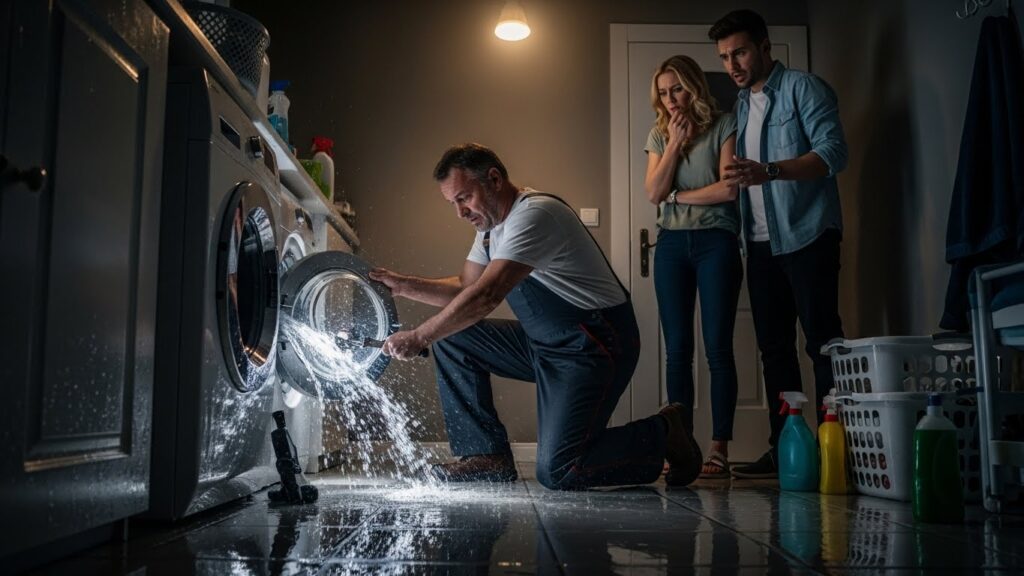
His first month on call, he got the classic flood-call—burst copper line behind a washer. He arrived to the clean scent of laundry still lingering in the air and the sharp rush of cold water pooling into a hallway. The homeowners were a young couple, wide-eyed and barefoot, passing towels to each other like sandbags.
Rafael shut off the main, stabilized the line, swapped compromised fittings, and checked the pressure regulator. Two hours later, the house was quiet again, and the couple was finally breathing. The invoice included a $175 emergency call-out fee, an after-hours hourly rate, and parts. He was tired—adrenaline spent—but he knew what this meant for his paycheck. At the end of the month, he noticed the bump: overtime, night differentials, and a couple of holiday premiums.
Emergency work isn’t glamorous. It’s heavy, urgent, and sometimes thankless. But when Rafael looked at his growing savings, he saw something else—options. He could fund better tools, pay for a backflow certification, and line up the marketing to go solo in a year. The money wasn’t just money. It was momentum.
What Is an Emergency Plumber?
An emergency plumber is a licensed plumbing professional who provides urgent, on-call repairs 24/7 or during extended hours. They handle problems that can’t wait: burst pipes, severe leaks, gas leaks, failed water heaters, sewage backups, and clogged main lines.
Key traits of emergency work include:
- Availability outside standard hours (nights, weekends, holidays)
- Faster response times and triage skills
- Safety awareness for gas, electrical, and structural risks
- Customer communication under stress
Because emergency calls are time-sensitive and disruptive, companies charge higher rates. That translates into higher pay opportunities via differentials, call-out fees, overtime, and bonuses.
—
Salary Overview and Pay Structures
Let’s ground this in data and lived experience.
- Baseline (all plumbers): The U.S. Bureau of Labor Statistics (BLS) reports median annual wages for plumbers, pipefitters, and steamfitters around the low-to-mid $60,000s. Emergency-focused plumbers typically earn above that due to premiums.
- Employed emergency plumber: $70,000–$95,000 total compensation is common in metro areas. In-demand techs with certifications or leadership responsibility can break $100,000.
- Self-employed: Revenue ranges widely—from $150,000 to $350,000+ for a solo operator running a true 24/7 service line. Net profit after expenses commonly lands in the 10%–25% range, depending on pricing, efficiency, and marketing.
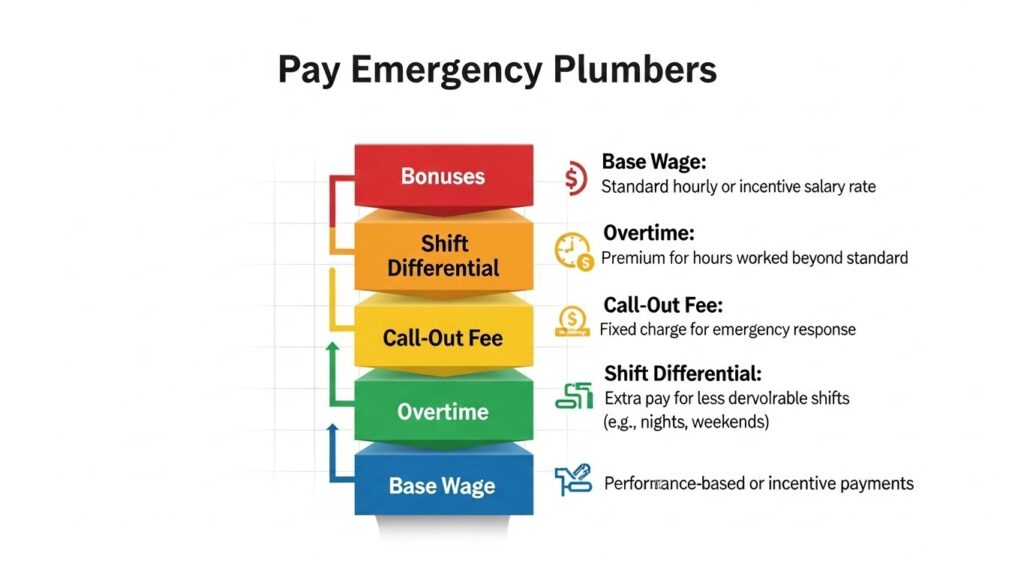
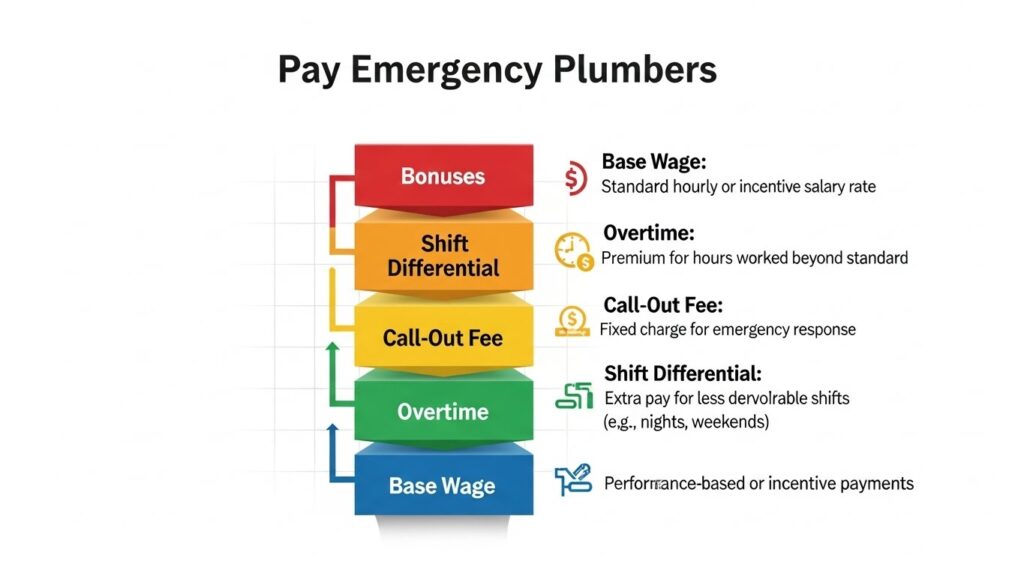
Pay Components You Might See:
- Base hourly wage (W-2): Your regular rate for standard hours
- Overtime: Typically 1.5x your hourly rate
- Call-out fee: A flat fee for after-hours mobilization
- Shift differential: A premium for nights/holidays
- Commission/bonuses: Percentage of ticket or monthly performance awards
- Standby pay: Paid for being on-call even if you don’t run a call
Here’s the takeaway: emergency work stacks multiple pay levers. Your total income is the sum of base, overtime, premiums, and how often you’re actually dispatched.
—
Factors That Influence Emergency Plumber Pay
Pay isn’t just about the clock. It’s also about where, how, and what you do.
1) Geography and cost of living
- High-demand, high-cost markets (e.g., coastal metros) tend to pay more.
- Rural areas may offer lower pay but less competition for calls.
2) Licensing and experience
- Apprentice < Journeyman < Master. Each level boosts your rate.
- Specialized experience (e.g., gas lines, boiler work) commands premiums.
3) Certifications
- Backflow prevention, medical gas, cross-connection control, and gas fitter endorsements can increase your value.
4) Employment type
- W-2 technicians often get steady hours, benefits, and overtime.
- Independent contractors and owner-operators trade stability for higher potential upside.
5) Schedule and availability
- Willingness to cover nights, weekends, and holidays is a proven pay accelerator.
6) Sales acumen and ticket size
- Communicating options, quoting clearly, and ethically upselling long-life solutions can significantly elevate total earnings.
7) Company reputation and marketing
- Strong brands capture more emergency calls; techs benefit via volume, tips, and incentives.
—
Typical Rates, Fees, and After-Hours Premiums
If you’re asking “how much do emergency plumbers make?” you also need to know what customers are charged. Those numbers explain your pay.
Common customer-facing prices in many U.S. markets:
- After-hours hourly rate: $150–$350 per hour
- Emergency call-out fee: $75–$250 (applied once per visit)
- Holiday premium: Added $50–$200 on top of the call-out or hourly rate
- Overtime (W-2 tech): Usually paid at 1.5x your hourly wage
Example 1: W-2 Tech Compensation
- Base rate: $30/hour
- Overtime: $45/hour
- Two-hour emergency call: 2 × $45 = $90
- Company may also pay a $50 on-call stipend that weekend
- Total to tech: $140 for the night (excluding benefits/bonuses)
Example 2: Self-Employed Invoice
- Call-out fee: $150
- Two hours on-site at $250/hour: $500
- Parts: $80
- Total invoice: $730
- After variable costs and overhead, the take-home profit might be $120–$200 for that job—assuming you price correctly and run efficiently.
Note: Pricing varies widely by region, competition, and brand positioning. Emergencies add logistical strain—hence the premium.
Employee vs. Self-Employed: Who Earns More?
Both paths can pay well, but they’re very different rides.
W-2 Employed Emergency Plumber
- Pros: Steady paycheck, benefits, training, dispatch support, paid overtime, less administrative work
- Cons: Income ceiling, set schedules, limited pricing control
- Typical total comp: $70,000–$95,000; top performers in strong markets can exceed $100,000
Self-Employed or Owner-Operator
- Pros: Pricing power, brand-building, higher upside, equity value in your client list and reputation
- Cons: Overhead, marketing, insurance, after-hours burnout risk, business admin, collections
- Typical revenue: $150,000–$350,000+ (solo). Net profit commonly 10%–25% with disciplined operations
Hybrid Approaches
- Some techs work W-2 and take approved side calls within company policy.
- Others partner with property managers for steady after-hours overflow.
Which earns more? In raw dollars, the independent path can win. But after-hours stress and overhead are real. Be honest about your capacity, family life, and risk tolerance.
—
Licenses, Certifications, and Union Membership
Licensing milestones—apprentice, journeyman, master—directly affect earning power. Many states require documented on-the-job hours and passing scores on exams. Master plumbers often unlock ownership opportunities and permit authority, which are valuable in emergency service.
Certifications That Can Boost Pay:
- Backflow Prevention (ASSE, or local equivalents)
- Medical Gas Installer (NFPA 99; where applicable)
- Gas Fitter endorsements
- Cross-Connection Control
- Confined Space and OSHA safety training
Union vs. Non-Union
- Union plumbers often enjoy higher base wages, strong benefits, and pensions. Emergency call policies vary by local agreements, but overtime and premium pay are structured.
- Non-union shops can pay competitively with performance bonuses. Emergency differentials may be more flexible and potentially higher in strong service companies.
—
Regional Pay Differences and Best-Paying Markets
Where you work matters.
Higher-paying states and metros tend to include:
- Coastal metros (e.g., San Francisco Bay Area, Seattle, Boston, New York City)
- Energy or heavy-industry regions with high demand for skilled trades
- Harsh-winter zones where freeze-related bursts spike emergency calls
Lower-cost regions may pay less in nominal terms but offer lower living expenses. If you’re mobile, consider following seasonal demand: cold snaps, hurricane seasons, and municipal infrastructure upgrades all shift call volume.
Remote or tourist-heavy areas also have unique dynamics. A vacation town might pay premiums during peak season when every hour counts for rentals and hotels.
—
Costs and Profit Margins (For Business Owners)
If you’re self-employed or planning to be, your income depends on both what you charge and what it costs to deliver a great emergency service.
Common Cost Buckets:
- Vehicle: truck payments, fuel, maintenance, branding wraps
- Tools and parts: drain machines, camera systems, soldering gear, inventory
- Insurance and bonding: general liability, workers’ comp, commercial auto
- Marketing: ads, website, SEO, lead platforms, reviews management
- Labor: tech wages or your own draw
- Admin: software (dispatch, invoicing), phone systems, accounting, taxes
Typical Service Business Targets:
- Gross margin: 55%–70% (after parts/COGS)
- Net profit: 10%–25% (after all overhead), achievable with tight operations
Why Emergency Helps Margins
- Higher average ticket due to time sensitivity
- Less customer price shopping at 2 a.m.
- Faster decision-making, more repair approvals
But remember the flip side: burnout. Smart scheduling and backup coverage are essential to keep quality and morale high.
—
How to Increase Your Earnings (Step-by-Step)
Want to boost how much you make as an emergency plumber? Use this checklist.
1) Master your quoting structure
- Build a clean, printed or digital price book with after-hours fees, time blocks, and parts bundles.
- Include clear language for holidays, diagnostic fees, and minimum charges.
2) Earn key certifications
- Prioritize backflow prevention and gas-related endorsements in your area. They pay off in emergency scenarios.
3) Improve communication
- In emergencies, clarity is currency. Explain options, risks, and costs calmly. Offer good-better-best solutions.
4) Reduce job time
- Pre-pack emergency kits: common fittings, shutoff tools, expansion tanks, supply lines, repair clamps.
- Use dispatch software and GPS to cut travel time.
5) Target high-value calls
- Partner with property managers, restaurants, and short-term rentals that need reliable after-hours help.
6) Optimize reviews and referrals
- Ask every satisfied client to leave a review while the relief is fresh.
- Automate review requests via text/email.
7) Price for sustainability
- Don’t undercharge. Your night and weekend time has real value. Stand by your call-out fee and premiums.
8) Protect your energy
- Build a rotating on-call schedule or join a small network for coverage.
- Turn off low-value leads if they drain bandwidth.
9) Track every number
- Maintain a weekly dashboard: jobs, average ticket, conversion rate, callback rate, gross margin, net profit.
10) Invest in preventive contracts
- Offer customers annual maintenance with priority emergency access. It stabilizes revenue and increases lifetime value.
—
Case Study: A Year in the Life (Numbers Inside)
Let’s model two scenarios so you can see how “how much do emergency plumbers make?” plays out.
Scenario A: Employed Emergency Plumber (Metro Area)
- Base pay: $32/hour
- Hours: 40/week regular + ~8 hours/week overtime (average)
- Overtime rate: $48/hour
- On-call stipend: $150/weekend (average 2 weekends/month)
- Quarterly bonus: $750 × 4 = $3,000/year
Annual Estimate:
- Regular pay: $32 × 40 × 52 = $66,560
- Overtime: $48 × 8 × 52 = $19,968
- On-call stipends: $150 × 24 = $3,600
- Bonuses: $3,000
- Total compensation: $93,128 (before taxes/benefits value)
Scenario B: Solo Owner-Operator (Suburban 24/7 Service)
- Average emergency invoices: 18 calls/month in winter, 10/month rest of year (avg 12/month)
- Average ticket: $580
- Annual emergency revenue: 12 × 12 × $580 = $83,520
- Plus regular-hour jobs: 20 tickets/month × $450 × 12 = $108,000
- Total revenue: ~$191,520
Assume:
- COGS/parts: 20%
- Overhead (vehicle, insurance, marketing, software): 30%
- Net profit before owner draw: 50% (gross margin) − 30% (overhead) = 20%
- Estimated net profit: $38,304
Owner-operators often pay themselves via a mix of wages and draws. With growth (more calls, better marketing, higher average ticket), that net can climb substantially. But the admin work and risk also rise.
—
Common Mistakes That Cap Your Income
If you’ve got the skills but the pay isn’t climbing, check for these speed bumps.
- Underpricing after-hours calls: Fear of losing a job keeps rates too low.
- Inconsistent phone coverage: Missed calls equal missed revenue.
- Slow response time: Customers book whoever answers fastest.
- No scripts: Stressed customers need clear, confident guidance.
- Weak follow-up: Forgetting to capture reviews and referrals leaves money on the table.
- No upsell path: Skipping long-term fixes leaves your average ticket flat.
Fix these, and your earning trajectory changes—fast.
—
Key Takeaways
- If you’re asking “how much do emergency plumbers make?”, the answer is: more than standard service roles due to after-hours premiums, overtime, and call-out fees.
- W-2 emergency plumbers commonly earn $70,000–$95,000, with top performers cresting $100,000.
- Solo operators can generate $150,000–$350,000+ in revenue. Profits hinge on pricing, efficiency, and marketing.
- Certifications, communication skills, and speed drive higher income.
- Guard against burnout. A sustainable schedule and clear pricing protect both your income and well-being.
Frequently Asked Questions About How much do emergency plumbers make?
1) Do emergency plumbers really make more than regular plumbers?
Yes. Emergency plumbers typically earn more because they handle nights, weekends, and holidays. Higher customer rates mean more overtime, premiums, and call-out fees, which can lift total compensation above standard service roles.
2) How much can a self-employed emergency plumber take home?
It varies with pricing and overhead. Solo operators often net 10%–25% after expenses. If revenue is $200,000 and you run at a 20% net, that’s about $40,000 in profit—plus your wages if you pay yourself a salary.
3) What’s a typical emergency call-out fee?
Many markets charge $75–$250 as a flat emergency call-out fee. It’s added to the hourly rate, which can run $150–$350 after-hours. Holidays can include additional premiums.
4) Which certifications help me earn more?
Backflow prevention, gas fitter endorsements, and medical gas certifications are strong earners. Also consider OSHA safety training and confined space credentials to expand your job scope.
5) Where do emergency plumbers get the most calls?
Cold-weather regions during freezes, older housing stock areas, coastal metros with heavy demand, and tourist towns during peak seasons tend to see more emergency calls. Property managers and restaurants also generate steady after-hours needs.
6) How many hours do emergency plumbers work?
Schedules vary. Some techs take one or two on-call weekends per month; others work rotating nights. Expect irregular sleep during busy seasons. Smart teams share coverage to avoid burnout.
7) Is union membership better for emergency pay?
It depends on the local. Unions often provide higher base pay and benefits with structured overtime rules. Non-union shops may offer flexible, potentially higher emergency differentials and performance bonuses.
—
Conclusion and Next Steps
So, how much do emergency plumbers make? More than many expect—thanks to overtime, on-call premiums, and urgent demand. Whether you’re employed or self-employed, the winning formula is clear: price confidently, respond quickly, communicate calmly, and track your numbers.
If you’re exploring this path, start by tightening your price book, adding a high-value certification, and lining up a reliable on-call schedule. Then build a simple marketing engine—reviews, local SEO, and fast phone response. That’s how you turn late-night calls into long-term income.
Ready to move from questions to action? Let’s map your next steps.
- Build your emergency price book this week
- Book a certification course this month
- Set up review requests and after-hours call routing
CTA: Want help dialing in your emergency pricing and processes? Contact our team to explore a personalized plan and revenue targets.
—
Suggested Links
- [LINK: U.S. BLS plumber wage data -> https://www.bls.gov/oes/current/oes472152.htm]
- [LINK: Wikipedia – Plumber -> https://en.wikipedia.org/wiki/Plumber]
- [LINK: How to become a licensed plumber (guide) -> https://primeemergencyplumbing.com/blog/]
- [LINK: Plumbing marketing ideas to get more emergency calls -> https://primeemergencyplumbing.com/blog/]
- [LINK: Pricing your plumbing services (calculator) -> https://primeemergencyplumbing.com/blog/]