How Expensive Are Emergency Plumbers? Real Costs Explained
Table of Contents
- [Introduction](#introduction)
- [Quick Story: A Midnight Leak and a Lesson](#quick-story-a-midnight-leak-and-a-lesson)
- [What Counts as a Plumbing Emergency?](#what-counts-as-a-plumbing-emergency)
- [How Expensive Are Emergency Plumbers? Average Costs Explained](#how-expensive-are-emergency-plumbers-average-costs-explained)
- [Cost Factors That Drive Emergency Rates](#cost-factors-that-drive-emergency-rates)
- [Typical Emergency Plumbing Prices by Job Type](#typical-emergency-plumbing-prices-by-job-type)
- [Hidden Fees to Watch For](#hidden-fees-to-watch-for)
- [Ways to Save on Emergency Plumbing Costs](#ways-to-save-on-emergency-plumbing-costs)
- [DIY vs. Pro: When to Call Immediately](#diy-vs-pro-when-to-call-immediately)
- [How to Get a Fair, Fast Quote](#how-to-get-a-fair-fast-quote)
- [Real-World Mini Case Study](#real-world-mini-case-study)
- [Regional and Seasonal Price Differences](#regional-and-seasonal-price-differences)
- [Keyword & Entity Table](#keyword–entity-table)
- [Summary: What You Should Expect to Pay](#summary-what-you-should-expect-to-pay)
- [Frequently Asked Questions](#frequently-asked-questions)
- [Conclusion](#conclusion)
- [Call to Action](#call-to-action)
- [Helpful Links](#helpful-links)
Introduction
If you’re Googling “how expensive are emergency plumbers?” you’re likely facing a burst pipe, a flooded floor, or a toilet that chose the worst possible moment to fail. You’re not alone. Emergencies happen after hours, and the price tag can feel like a second shock.
Here’s the good news: you can anticipate (and often reduce) those costs with a bit of knowledge. In this guide, we’ll break down typical emergency plumbing rates, explain why they’re higher, and share practical ways to save—without risking bigger damage.
Quick Story: A Midnight Leak and a Lesson
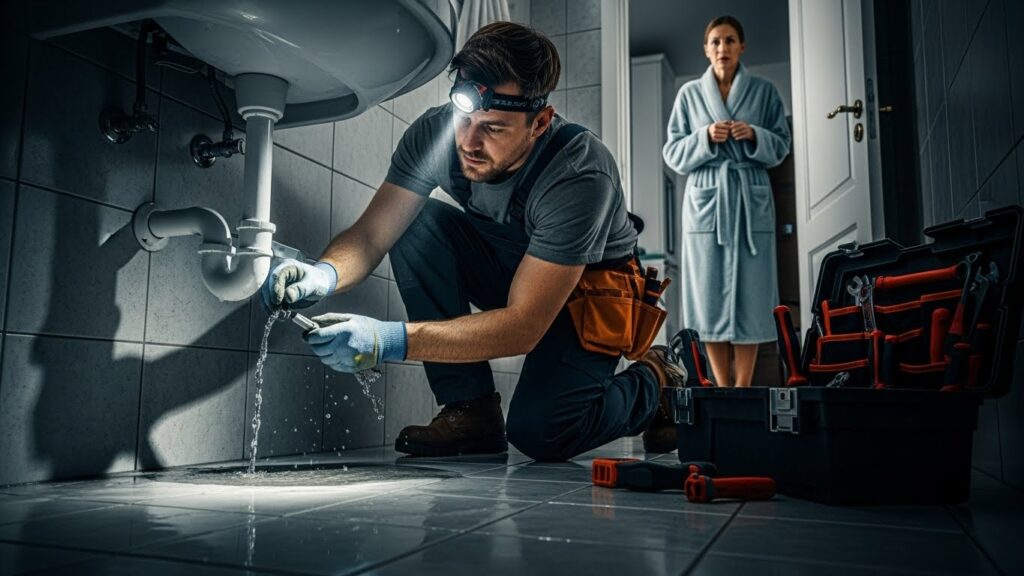
It was 12:41 a.m. when the upstairs bathroom started dripping into the kitchen light fixture. You know that cold, sinking feeling when you hear water where it shouldn’t be? That was Jenna. She grabbed towels, shut the water, and called an emergency plumber.
He arrived in 45 minutes with a quiet hello and a headlamp. The diagnosis: a cracked supply line behind the vanity. He isolated the line, replaced the connector, dried the area, and tested the pressure. Final invoice: $389—more than a typical daytime repair, but a lot less than the ceiling repair would’ve cost if she’d waited.
The lesson was simple: when water is moving, time is money. Call fast, ask the right questions, and know what costs are normal for after-hours service.

What Counts as a Plumbing Emergency?
Not every problem needs a 2 a.m. visit. But some issues really can’t wait:
- Active leaks or burst pipes that are spreading water
- Sewage backups or a non-functioning main toilet
- No water supply to the entire home
- Gas line issues (call the gas company or emergency services first)
- Water heater failures causing leaks or safety concerns
If you can safely shut off water to the affected fixture or the main line, you may be able to wait until morning. But if you can’t stop the flow, or the issue risks health and property damage, it’s an emergency.
How Expensive Are Emergency Plumbers? Average Costs Explained
Let’s answer the big question head-on: how expensive are emergency plumbers? On average, you’ll see a higher base fee plus a time-of-day premium. Here’s what’s typical in many cities:
- Service call/dispatch fee (after-hours): $100–$250
- Hourly labor (nights/weekends/holidays): $150–$400 per hour
- After-hours multiplier: 1.5x to 2x the standard daytime rate
- Materials/parts: priced separately (from a $12 fitting to a $400 valve)
- Typical emergency visit total: $250–$900 for minor-to-moderate fixes; complex jobs can run $1,000–$3,000+
Why the premium? Emergency plumbers keep techs on-call, stock more parts, and work outside normal hours. That readiness costs money—but it’s what saves your floors, drywall, and sanity when things go wrong.
Quick Cost Table (High-Level)
| Line Item | Typical Range |
|—|—|
| After-hours service fee | $100–$250 |
| Hourly labor | $150–$400/hr |
| Small parts (valves, fittings) | $15–$100 |
| Moderate parts (pumps, traps) | $120–$400 |
| Large parts (water heater components) | $150–$600+ |
| Common total for minor emergencies | $250–$900 |
| Complex emergency repairs | $1,000–$3,000+ |
Cost Factors That Drive Emergency Rates
Prices vary for real reasons. Understanding them helps you evaluate quotes quickly.
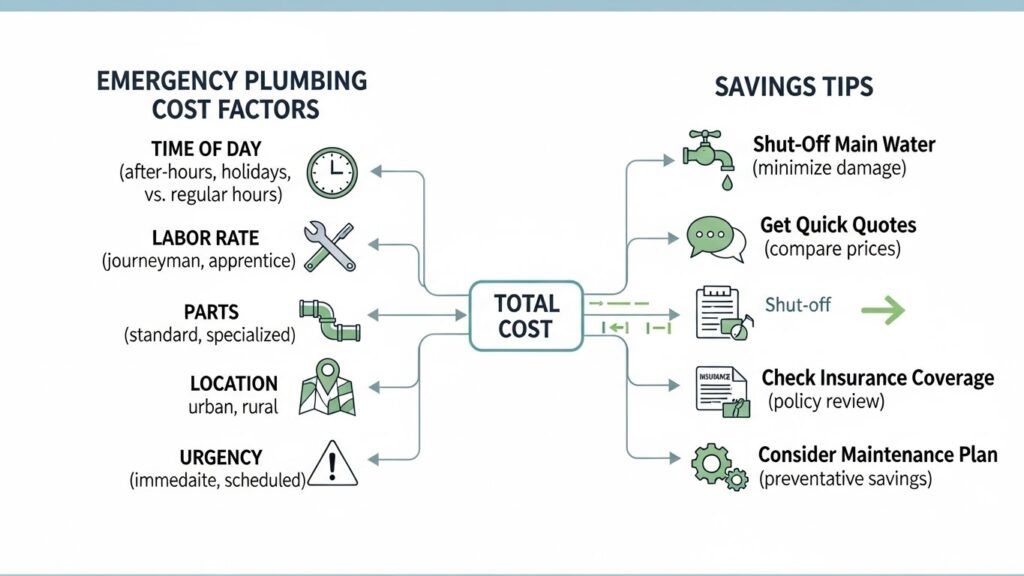
1) Time of day and urgency
- Nights, weekends, and holidays cost more.
- Faster arrival windows (e.g., <1 hour) may carry a premium.
2) Location and travel distance
- Urban centers often pay more than rural areas.
- Longer travel times and tolls can add to the dispatch fee.
3) Complexity of the job
- Hidden leaks behind walls vs. a visible, simple replacement.
- Diagnostic time adds to labor hours.
4) Parts availability
- If the tech doesn’t have the part on the truck, a late-night supply run can increase time and cost.
5) Home accessibility
- Tight crawl spaces, old shut-off valves, or corroded fittings mean more labor.
6) Permits and code requirements
- Some fixes (especially gas or main-line work) may require code-compliant parts or additional steps.
Typical Emergency Plumbing Prices by Job Type
Every situation is unique, but these ranges give you a realistic baseline.
- Burst or leaking pipe repair: $300–$1,500
- Main drain clog or sewer backup (snaking): $200–$800
- Hydro jetting (severe clogs/grease): $450–$1,200
- Toilet overflow with partial rebuild: $250–$700
- Water heater repair (leaks, valves, igniters): $200–$900
- Water heater replacement (emergency install): $1,200–$3,000+
- Sump pump repair/replacement: $350–$1,200
- Frozen pipe thawing: $250–$800 (more if damage occurs)
- Slab leak diagnosis and patch: $500–$2,500+ (repiping is more)
Note: These are after-hours ballparks. Daytime rates are usually 20–40% lower, depending on your market.
Hidden Fees to Watch For
Nobody likes surprise charges. Ask about these up front:
- Minimum charge: Many companies bill a 1–2 hour minimum at after-hours rates.
- Trip charge: A flat travel fee on top of the service call.
- Diagnostic fee: Sometimes separate from the repair cost.
- Emergency premium: A weekend/holiday surcharge beyond the normal service fee.
- Consumables: Pipe dope, solder, fittings, and cleanup supplies.
- Cleanup or water mitigation: Subfloor drying or wet-vac services may be itemized.
Tip: Ask for a line-item estimate before work begins. A reputable pro will explain each fee plainly.
Ways to Save on Emergency Plumbing Costs
Here’s how to protect your budget without risking your home.
1) Stop the water first
- Learn where your main shut-off valve is and label it.
- Use localized shut-offs for sinks and toilets.
2) Stabilize the situation
- Towels, buckets, and turning off the water heater’s power can prevent extra damage.
- For small leaks, a temporary compression cap may buy time until morning.
3) Call your insurer
- Sudden and accidental water damage may be covered, less your deductible.
- Ask if they recommend preferred vendors—they may offer negotiated rates.
4) Ask the right questions on the call
- “What is your after-hours service fee and hourly rate?”
- “Do you charge a weekend or holiday premium?”
- “Is there a minimum billable time?”
- “Can you give me an estimate range before dispatch?”
5) Compare, but don’t stall
- Get two quick quotes if you can, but don’t wait if water is spreading.
- Waiting overnight can multiply your bill in water damage repairs.
6) Join a maintenance plan
- Some plumbing companies offer members discounted emergency fees and priority service.
7) Prevent the next emergency
- Replace brittle supply lines, test shut-off valves, and flush water heaters annually.
DIY vs. Pro: When to Call Immediately
You can DIY some quick stabilization, but know your limits.
- Safe DIY steps: Shut off water, mop up, place a bucket, wrap a small drip with plumber’s tape as a temporary measure.
- Don’t DIY: Gas lines, main sewer backups, electrical issues near water, or anything you can’t see or control.
- Rule of thumb: If water is actively running where it shouldn’t be—or sewage is involved—call a pro now.
DIY attempts that fail can add hours of labor and damage. If you’re unsure, a phone triage with a licensed plumber can prevent costly mistakes.
How to Get a Fair, Fast Quote
Even at midnight, you can ask for clarity.
- Be ready with details: What’s leaking, where, when it started, and any steps you’ve taken.
- Ask for the structure: “What’s your after-hours fee, and what’s the hourly rate after that?”
- Request a ballpark: A range based on similar calls can help you decide quickly.
- Confirm paperwork: Ask for digital estimates and photos before/after, even at night.
- Payment terms: Some companies offer financing for larger emergency jobs.
Real-World Mini Case Study
Problem: Basement floor drain backing up during a storm.
- Arrival: 70 minutes (storm night, high volume)
- Diagnostic: Camera inspection showed heavy debris at the main cleanout
- Fix: Snaked the line, partial flow restored, then hydro-jetted for full clearance
- Time: 1.5 hours total
- Invoice: $175 after-hours fee + $300/hr × 1.5 hours = $625, plus $50 for jetting nozzle wear = $675 total
Homeowner takeaway: The cost was significant, but catching it early prevented a sewer backup into finished basement carpeting—a potential $2,000–$5,000 mitigation bill.
Regional and Seasonal Price Differences
Rates aren’t the same everywhere.
- High-cost metros (NYC, SF, Boston): Expect the top end of ranges and higher after-hours fees.
- Suburban and rural areas: Lower hourly rates, but longer travel times can offset savings.
- Seasonal spikes: Freeze-thaw cycles in winter and heavy spring rains can tighten schedules and bump prices.
Check local averages from reputable sources and compare two or three licensed providers to set your expectations.
Summary: What You Should Expect to Pay
- Minor emergencies (tighten/replace a valve, simple leak stop): $250–$500 after-hours.
- Moderate issues (small pipe repair, toilet rebuild, basic drain clog): $400–$900.
- Complex jobs (sewer line heavy clog, water heater replacement, slab leak patch): $1,000–$3,000+.
Remember, those ranges assume after-hours rates. For non-urgent work, ask about next-day scheduling to avoid the after-hours premium.
Frequently Asked Questions
1) Why are emergency plumbers more expensive?
Emergency plumbers work nights, weekends, and holidays, and keep trained techs on-call with stocked trucks. That readiness and rapid response carry higher costs. You’re paying for speed, availability, and reduced property damage.
2) Can I avoid an emergency fee if I wait until morning?
If the situation is stable and you’ve shut off the water, yes, waiting can save 20–40% versus after-hours rates. But if water is spreading or sewage is involved, waiting may multiply damage costs. Ask a pro to triage by phone.
3) What’s a fair after-hours hourly rate?
In many areas, $150–$400 per hour is common after-hours, with a service fee of $100–$250. The exact number depends on your city, distance, and the type of repair needed.
4) Does insurance cover emergency plumbing costs?
Home insurance often covers sudden and accidental water damage, minus the deductible. The plumbing repair itself may not be fully covered, but the resulting damage (like soaked drywall) can be. Call your insurer before authorizing extensive work.
5) How can I reduce the cost of an emergency call?
Shut off water fast, describe the problem clearly, and ask for the fee structure up front. If it’s safe to wait, schedule daytime service. Consider a maintenance plan, and replace brittle supply lines before they fail.
Conclusion
If you were wondering “how expensive are emergency plumbers?” the short answer is: more than daytime calls, but often worth it. After-hours visits typically run $250–$900 for minor-to-moderate fixes, and complex emergencies can hit $1,000–$3,000+. The premium reflects immediate availability, expertise, and the cost of preventing bigger damage.
Here’s the thing: a fast shut-off, a clear call for help, and a few smart questions can keep your bill predictable. With the right plan, you can manage the moment—and protect your home and budget.
Call to Action
Need help now or want a preventative checkup? Get a fast, no-pressure estimate. Call a licensed local pro, ask for the after-hours rate and minimums, and compare two quotes if time allows. Don’t wait if water is flowing—speed is savings.
Helpful Links
- [LINK: Average plumbing costs and trends -> https://www.forbes.com/home-improvement/plumbing/plumber-cost/]
- [LINK: Home plumbing maintenance checklist -> https://www.hud.gov/sites/documents/HOMEOWNERSGUIDE.PDF]
- [LINK: Understanding home insurance water damage -> https://www.iii.org/article/what-is-covered-dwelling]
- [LINK: What is a plumber? (Wikipedia) -> https://en.wikipedia.org/wiki/Plumber]
- [LINK: Preventing burst pipes in winter -> https://www.ready.gov/winter-weather]